Spanish Grammar
Spanish grammar rules covering verb tenses, gender, accents and common areas of confusion. Articles explain when to use ser versus estar, por versus para, and irregular verb patterns.
Accents in Spanish
Spanish uses accent marks on vowels to show which syllable gets emphasis, and there are three rules that determine where stress falls.
Adjectives in Spanish
Understand how Spanish adjectives work, including where to place them and how to match them to nouns by gender and number.

Gender of Nouns in Spanish
Spanish nouns are either masculine or feminine, and you can figure out which by learning their endings and meanings.

How to Learn Future Tense in Spanish
Spanish has two main ways to express the future: the immediate future using ir + a, and the future simple tense with specific verb endings.
Irregular Verbs in Spanish
Radical changing verbs in Spanish follow predictable patterns once you learn which stem vowels shift in stressed positions.
Personal a in Spanish
When a Spanish verb has a person as its direct object, you need to put 'a' before it to show what's happening.
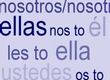
Personal Pronouns in Spanish
Spanish personal pronouns change depending on whether you're the subject, object, or talking indirectly, and this guide shows you how to use each one.
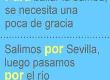
Por and Para in Spanish
Learn when to use por and para in Spanish by understanding the simple rules that distinguish these two commonly confused prepositions.
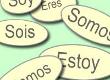
Ser and Estar in Spanish
Spanish has two verbs meaning "to be", ser and estar, each used differently depending on what you're describing.

Spanish Words to Watch Out for
Spanish false friends like "embarazada" and "actual" can trip up learners who mistake them for similar English words.
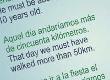
The Conditional Tense in Spanish
The Spanish conditional tense expresses what would happen if certain conditions were met, using the same stems as the future tense with imperfect verb endings.
The Infinitive in Spanish
Spanish infinitives end in -ar, -er, or -ir and work as nouns or follow other verbs to express actions without tense or person.
The Past Imperfect Tense in Spanish
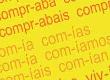
The Spanish past imperfect tense describes ongoing or incomplete actions in the past, with regular formation rules and irregular verbs like ser and ir.
The Past Preterite Tense in Spanish
The Spanish preterite tense describes completed past actions, and knowing when to use it instead of the imperfect makes your translations accurate.
The Present Tense in Spanish
Spanish present tense covers current situations, habits, near future events, and permanent states, even though its name can be misleading.
The Subjunctive in Spanish
The Spanish subjunctive mood shows uncertainty and doubt, and appears in commands, after influence verbs, and subordinate clauses.